Monday, January 27, 2025

How Laravel Queues and Jobs Optimize Business Processes

Laravel is a PHP framework that is very good for web application development. Laravel’s queues and jobs are among its many features, but they are also tools for efficiently handling background processing. Queues are the facility to delay the task execution for later and unblock the resources to improve the responsiveness of the application. What that means is that your application is able to process user’s requests faster as the heavy lifting is all done in the background. However, these queues process jobs which are individual tasks or units of work. They can be as simple as sending emails or crunching data and are meant to be run asynchronously. The asynchronous nature of it is what makes this suffice, allowing you to keep a snappy and responsive application even when you are dealing with complex tasks which would cost you a lot of time and computational power.
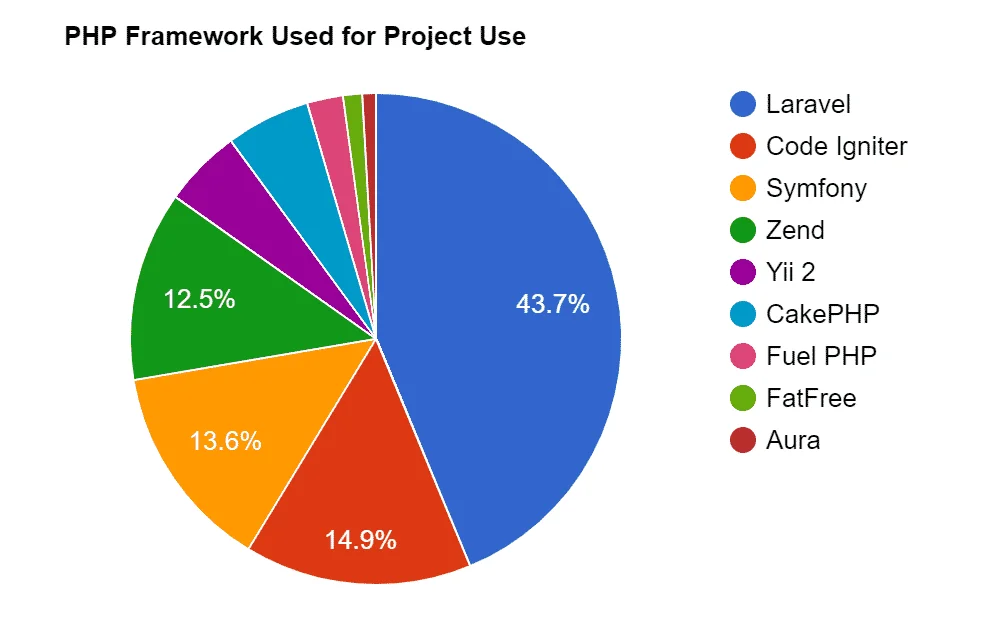
Another strong feature is the fact that it’s easy to set up these queues and these jobs. Even if you’re not a seasoned developer, Laravel has clear documentation and an intuitive API, so it’s easy to get started. It's so easy, so you can quickly put queues and jobs into your current workflow in order to save time and eliminate complexity.


Need a scalable and feature-rich framework for your web project? Hire Laravel developers to build secure, scalable, and high-performing web applications tailored to your needs.


Optimizing Processes with Queues

Tasks that demand lots of time and resources are best managed by queues. Queues also enable businesses to put those tasks in the background so that their applications don’t become slow and unresponsive. Suppose you have an e-commerce site that you want to send order confirmations and generate sales reports from. They don’t have to get done immediately but can be put in the queue and processed later. This helps the site to respond to customer interactions quickly without delays. For instance, queues are built to manage email notifications. An email confirmation can be sent in the background while the customer continues to browse or make more purchases when a customer places an order. This keeps the site snappy and user friendly.
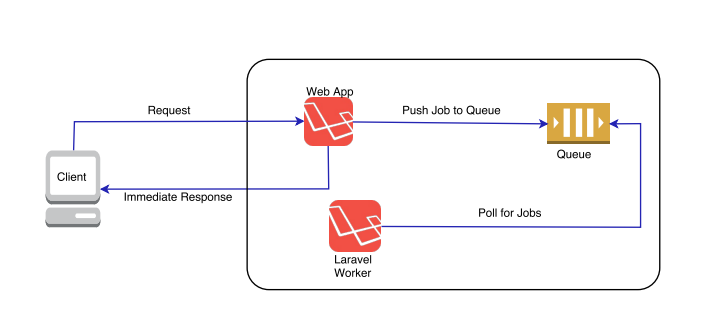
Queues are also useful for video processing. Converting and processing videos can be very resource intensive if you run a video sharing platform. With tasks queued, the main site can remain available to user actions while the videos are run in the background. Users can upload their videos and keep exploring the site, knowing that their uploads will be taken care of. The task of generating reports is also very common, and is also a task that can be alleviated with a queue. Detailed reports are needed by businesses that take time to compile. This way, the main application then handles things under other operations and is offloaded to a queue. Employees can request a report and keep working, without having to worry about their immediate tasks being interrupted by the report.

Queues also help you balance the workload on your servers. At peak times, tasks are distributed evenly across many servers so that no server ever becomes overwhelmed. The load balancing makes sure that no matter how many people are in the queue, all parts of the application run smoothly. Finally, Laravel’s queues are super configurable and can have priorities for different jobs for the businesses. First, critical operations can be handled, so that critical functions are always prioritized. Queues are a valuable tool for any enterprise that wants to optimize its processes and increase overall efficiency, and this level of control makes queues a great tool for any enterprise.

Simplifying Job Processing

Job processing in Laravel is easy and efficient. Those are jobs; they’re tasks like sending out welcome emails, or handling big data. Defining and managing these jobs is simple using Laravel, allowing businesses to concentrate on their main work without being overwhelmed by technical issues.

  • Laravel is one of the standout features because it makes creating jobs so easy. It is simple and readable, you can define what each job should do. It is so easy to use that even those who do not have deep technical expertise can use it. Laravel makes it easy to set up jobs, whether it’s processing orders or managing notifications.

  • It’s just as easy to manage jobs. Laravel comes with built in tools to track and handle job failures, retries, and so on. If a job fails, you’ll know why and be able to fix the problem without much hassle. That level of control makes sure your background tasks do what they need to be doing and precisely when they’re supposed to be doing it.

  • The other key benefit is that you can run jobs asynchronously. What this means is that your main application doesn’t have to wait for these tasks to finish. Say, a file from a user can be uploaded and the system can process it whilst the user proceeds to interact with the application via the system. It keeps your app responsive and user friendly.

  • Different types of queues are supported by Laravel so that you can choose how you will handle your jobs. Laravel makes it easy to switch between a database, Redis, or another backend. It’s important for businesses that may need to scale or change infrastructure over time.

  • Laravel’s job batching also enables you to combine multiple jobs together for processing as a single ‘batch’. What’s really handy about this is that this is useful for tasks that are a part of a larger workflow. It allows tasks to be standardised and completed quickly.

  • With detailed documentation and a supportive community, it’s easier to start and should overcome any hurdles you encounter. With rich support, this makes it easy to both implement and maintain the job processing.

Boosting Application Performance

Queues and jobs are the key to speeding up and improving the performance of your applications. Resource intensive operations are moved from your main application to background processes for a faster and more efficient running of your main application. Queues can be used for example, to handle many transactions at once without any lag, for example, on an e-commerce platform. That means that customers can keep on shopping and checkout without experiencing slowdowns, which increases the user experience.
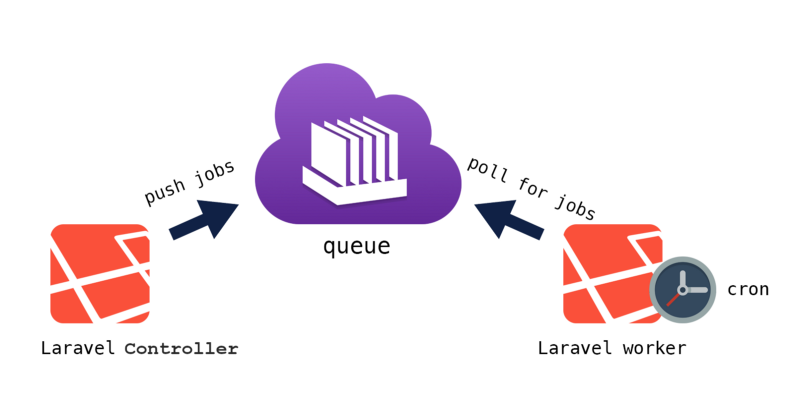
  • Queues allow us to have any tasks like processing payments, updating inventory or sending order confirmations in the background. It allows your application to stay quick and responsive even when your application is doing complex tasks. As an example, the payment can be queued and processed when the customer continues to browse-site instead of making the customer wait until it is processed.

  • The other key feature is the ability to run jobs asynchronously. With task background processing, that main application is able to devote itself to immediate user interactions. That means you get a faster, more responsive application that's not too slow to handle a high volume of traffic at the same time.

  • Another big advantage is load balancing. Queues get us past this by spreading tasks across many servers to prevent any one from being overloaded. This is crucial with peak traffic periods in order to maintain a consistent application performance. For one, if an online store hosts a big sale event with significant surge in user activity, they can easily handle things like order processing and inventory updates on multiple servers.

  • Better performance is also served in part by Laravel’s support for multiple queue backends. Laravel lets you optimize task processing based on your backend, whether it’s Redis, Beanstalkd, or something else. That flexibility enables you to select the best tool for the job and keep your application responsive and scalable.

On top, Laravel provides a job batching feature that helps to do several related tasks in an efficient way. That’s super handy for workflows that have multiple steps, like data import or something like bulk notifications. Processing these tasks together will reduce the time and resources needed, and increase overall application performance.

Cost-Effective Solutions for Businesses

Laravel’s queues and jobs allow businesses to optimize operations without spending a fortune. Companies can make the most out of their existing resources by handling time consuming tasks in the background. Not only does this improve performance but also costs associated with usage of the server and labor. For example, if you automate email sending, data processing or report generation then you will require fewer manual interventions. It enables employees to concentrate on more strategic activities, without additional costs, increasing productivity. Automation aids in allowing the businesses to fulfil the services at a high level but they do not need extra staff to work this task manually.

  • Laravel also makes it easy to run tasks asynchronously which allows us to better utilize our servers. The ability to distribute tasks across multiple servers lets businesses minimize the cost of overloading a single server, which is usually associated with higher operational costs. This distribution guarantees that no server is overloaded, and that infrastructure and cost are used efficiently.

  • Additionally, Laravel provides multiple queue backends support, so Redis and Amazon SQS are supported as well. This gives businesses the opportunity to choose the most cost effective solution that fits their needs. This adaptability means whether you’re a small startup or a large enterprise, you don’t have to invest in expensive infrastructure from the get go. Without unnecessary cost, you can scale your capacity as your business grows.

  • Laravel also makes this monitoring easy and helps managing these tasks so chances of failures and spending on quickfire troubleshooting are reduced. Businesses can use built in tools for tracking job performance and retries to make sure tasks get done without any additional intervention. This cuts down the downtime and repairs costs error.

Laravel’s queues and jobs can also help you save the cost of system crashes and downtime with business. A more stable application means less risk of outages that can be expensive to fix, and efficient task management. This helps to keep your application reliable and cost effective in the long run.

Scalability and Security Features

Laravel is known for its ability to scale without issue, which is why it’s a popular choice for businesses that are expecting to grow. Laravel's queues can already handle additional tasks as your needs grow so you don't need to make major infrastructure changes to do so. You’re guaranteed this flexibility so that your system can react, and react well, during periods of increased demand and continue to deliver the same smooth user experience.

  • One part of the scalability is the ability to balance loads well. Laravel’s queues distribute tasks across multiple servers, so that no single server can become overwhelmed. Not only does this keep performance up during busy times, but it also makes the most of the resources you have available, so you can get the most out of your infrastructure.

  • Laravel doesn’t cut corners when it comes to security. Built in features of the framework secure the environment where jobs are executed. It is important for protecting sensitive data while processing. For instance, if you’re dealing with financial transactions or personal information, you can be sure that Laravel will help keep this data safe.

  • Laravel also provides encrypted communication channels for your operations. In this, data transferred between servers or between the app and its users remains protected from any threat that may spring up in future. The level of security is key for loyal customers to trust and for compliance with regulations.

  • One stand out feature is Laravel’s rock solid authentication and authorization system. They claim this prevents non authorized jobs from being run and reduces the risk of unauthorized access. Detailed logging and monitoring is provided by the framework and you can keep an eye on everything and quickly see if something is amiss.

Laravel’s job retry mechanism takes care of system integrity as well. Jobs fail, and if so, it can automatically try to retry in an effort to minimize data loss or corruption. Especially useful for assuring the integrity of critical operations, the feature is also of use in assuring that data has not been corrupted or tampered with in transit.

Integrating with Existing Systems

Laravel queues and jobs can work well within your existing systems and greatly boost efficiency without requiring you to change from the ground up. Laravel’s ability to integrate easily with other applications and services is one of the biggest advantages of Laravel, due to its comprehensive and clear documentation. That means you can easily add queues and jobs into your existing workflows, and the transition is almost seamless. For example, suppose your business is already using a CRM system. In this case, Laravel’s queues can be integrated to perform background tasks such as synchronization data or send notifications by email. This means that your CRM is responsive while it is doing its job in the background. Laravel also helps with tasks like inventory updates and order processing without degrading the user experience if used on an e Commerce platform.

  • Laravel also works nicely with almost all the third party services and databases. If you’re using MySQL, PostgreSQL or even NoSQL databases like MongoDB, then the queues and jobs that Laravel provides are easy to configure to work with these systems. This flexibility means you don’t have to change your current setup to use Laravel’s features.

  • Laravel also has a very extensive API support, so you can connect to other software solutions your business is using. It can account for marketing automation tools, payment gateways or analytics platforms for example. When you integrate these systems with Laravel queues, you can continue to flow data between various parts of your business, automated and minimizing the chance of error.

  • The setup process is meant to be simple so that even if you don’t have a technical background, you can get up and running. Laravel’s user friendly interface and robust community support will help you through every step from initial configuration to ongoing maintenance.

  • Also, Laravel’s modular architecture allows you to add queues and jobs as you go. Begin with one or two background tasks, run them, and then increase their use over time. With this phased approach, you are minimizing disruption, allowing you to test and optimize as you go making for a smooth integration.

Choosing the Right Development Partner

Choosing the best development partner can make a big difference when it comes to implementing Laravel queues and jobs. Check for a company that has experience with Laravel. They do this so that your business needs are the first thing on their minds when they think about solving a problem for you, and this also ensures that they truly know the framework inside and out.

  • A good partner will have a history of successful projects. Know their portfolio, their client testimonials to check their experience and reliability. You will get a good idea of their ability to complete quality work on time and on budget.

  • The other important factor is communication. Transparency by the development company about their processes and timelines is what should be developed. One way to deal with them is to provide regular updates to keep you in the loop and an open line of communication so you can get shot of any problems immediately.

  • Also think about their security and scalability approach. Your development partner should follow best practices in data protection and make sure your system can scale with your business. For example, it’s deciding how your queues will handle increasing workloads without sacrificing performance.

  • A good development partner will also provide post launch support. It guarantees that any problems that arise after implementation are quickly resolved. Long term success of your project requires ongoing support and maintenance.

  • And finally, select your partner with whom you can collaborate and understand your business objectives. Your success should be invested in and they should be willing to provide solutions that support your goals. As a collaborative approach, the final product doesn’t just meet, but beats your expectations too.

Summary

Laravel queues and jobs give you an easy way to process background tasks without dragging your application’s response time down. Moving time consuming operations like email notifications, data processing and report generation to the background will help you to have a smoother user experience and better performance. Not only it makes your business operations more efficient but also it increases customer satisfaction. Laravel queues and jobs can save you a lot of money. Manual intervention is reduced by automated task management, allowing more culinary time to be reallocated for more important work. It also saves your business on operations costs as it helps you have efficient server resource utilization.

Laravel’s scalability features mean that your application can grow with your business. Laravel's queues can take care of the extra load whether you're dealing with more traffic or more complex operations, without requiring a major change to your infrastructure. This flexibility makes sure that your system remains elastic, and functional as your business grows. Strong point is security. Laravel comes with built in features to protect sensitive data and guarantee secure task execution. It’s important for keeping customer trust and meeting regulatory requirements.

To maximize these benefits, you need to select the right development partner. Find a team with experience in Laravel and a desire to learn about your business. They can assist you in putting together and keeping up a framework that is in accordance with your objectives and helps you develop. Laravel queues and jobs are extremely good tools for speeding up your business processes. They help you scale your operations and achieve long term success by improving efficiency, reducing costs and improving performance. These features are yours to embrace to stay competitive and meet the changing needs of your industry.


Thursday, December 26, 2024

Magento 2.5: Unlocking the Power of Headless Commerce


Headless commerce is changing the way businesses think about online retail. Headless commerce is different from traditional e-commerce setups where front end (the part customers interact with) and back end (where data and processes are stored) are tightly coupled. As a result, greater flexibility and customization are available. Headless commerce allows you to create a customized front end using a variety of technologies while still relying on a strong back end for inventory, transaction processing, and customer data. This separation allows you to fast adopt new trends and technologies, giving you the ability to deliver more responsive and engaging user experience.

It also makes it easier to integrate headless commerce with additional digital tools and services as well. Whether it’s a new marketing platform, an advanced analytics tool or a specialized payment gateway, headless architecture makes sure that everything works together smoothly. This level of flexibility is required to remain competitive in the fast moving e-commerce world today.

Reasons to Opt for Magento 2.5

Magento has made a big name for itself in the world of e-commerce for being rock solid and packed full of features. 

  • With Magento 2.5, businesses can expect more than just maintaining a web store; they can expect an upgraded experience. The biggest thing Magento 2.5 is focusing on is performance. This results in your customers loading pages faster and performing their shopping activities more effectively which ultimately gives you higher conversion rates.

  • Magento 2.5 is also very flexible. Customization of the platform is at a high level of definition that the business can have as it is- once businesses are sure of their branding and what they need from their online store. What this means is that you can create a unique and engaging shopping environment that’s different from what everyone else is doing.

  • Magento 2.5 is also developer friendly. The platform is built with more powerful APIs to help you build custom integrations and extend the functionality. This means that your store can respond to new tools and technologies as they come out, ahead of the competition.

  • Magento 2.5 also has great support for mobile commerce. As more and more shoppers use their smartphones to make online purchases, it’s important to have a platform that works well on mobile devices. Magento 2.5 guarantees that your store is not only accessible but also optimized for mobile users and that your store will be accessible and fully optimized for mobile users.

  • Is your e-commerce platform unable to meet modern customer demands?
    Hire Magento developers at Hidden Brains to create a fast, customizable, and seamless headless commerce experience.

  • Grasping the Headless Architecture

    Decoupling the front end and back end with headless architecture fundamentally changes how e-commerce systems work. This separation allows businesses to pick different technologies to implement your core functionality and the user interface, making it easy to work with changing trends and trends. For instance, a company updating its website design may not need to bother the underlying system for inventory, orders and customer data.

    • This app structure is incredibly flexible, allowing businesses to customize and personalize the customer experience while keeping e-commerce platform limitations in check. With Magento 2.5, they can integrate multiple front end frameworks like a traditional web page, a mobile app or even a voice activated service and keep the robust backend of Magento 2.5 intact.

    • Additionally, headless architecture makes it easy to integrate third party services and tools. The decoupled nature of the system makes it easy to add a new marketing platform, an analytics tool or a specialized payment gateway. By allowing businesses to quickly adapt new technologies to stay competitive, it enables companies to meet the market demands quickly.

    • Furthermore, headless architecture provides a lot of performance benefits. Because the front end and back end are separate, both can be optimized separately. Faster load times and a smoother user experience are essential for keeping customers and driving sales, so this means faster load times and a smoother user experience.

    Main Features of Magento 2.5

    With Magento 2.5, you get a host of new features to help you run your e-commerce business better. 

    • The standout feature is the additional API capabilities that make it simple to extend or create custom integrations. That means you can easily tie your store to other platforms and services, keeping things running smoothly.

    • Other than scalability, Magento 2.5 is another strong suit. With your business growing the platform will grow with no hassle of increased traffic or transaction volumes. The scalability of this means that your online store will stay fast and reliable no matter how busy the shopping period is.

    • Magento 2.5 is a priority for security. It protects sensitive data with robust data encryption, and updates security of the platform on a regular basis. This security focus protects your business and your customers from possible threats.

    • Magento 2.5 also allows for mobile commerce. The platform has risen to the occasion as the mobile shopping has increased and your store has to perform exceptionally well on smartphones and tablets. Providing a great user experience across all devices requires this mobile optimization.

    Magento 2.5 gives you many options for customization as the last option. The flexible architecture of your online store can be tailored to suit your brand’s unique identity. With Magento 2.5, you can either use customizable templates or personalized user experiences to make your mark in a crowded market.

    Tailoring the User Experience

    The latest Magento 2.5 offers a store owner the ability to build individual shopping experiences that strike a chord with each customer. With the help of detailed data analytics, you can know what customers prefer, purchase history and so on. Then this can be used to draw content, offers, and recommendations for each user. For example, if a customer buys sportswear pretty often, then when they visit the website next, you can show them new additions for that category. In addition, it is easy to customize the look and feel of your store to match your brand identity, and provide unique shopping journeys.

    Towards the end, Magento 2.5 supports the advanced segmentation features in order to segregate customers according to different criteria such as location, previous purchases, or visiting history. This segmentation helps you to run targeted marketing campaigns and personalized promotions that increase the likelihood of conversion. Real time data integration makes sure your content is always relevant and fresh, thereby improving the shopping experience.

    Additionally, Magento 2.5 lets you go the extra mile for users’ checkout experience by generating personalized upsell and cross sell strategies. Customer satisfaction rises as they can make additional purchases at checkout by suggesting complementary products. Customization of every touchpoint of the user journey ensures that your customers are valued and engaged, resulting in loyalty and repeat business.

    Also Read: Magento Development for Omnichannel Presence

    Effortless Integration with External Tools

    For modern businesses, the ability to work with different external tools is one of the strongest attraction points of Magento 2.5. It’s easy to integrate with popular payment gateways, so your customers have multiple options at checkout. It also works well with the top inventory management systems, so you can always know where you stand with your stock levels.

    • Magento 2.5 excels in marketing tools too. The platform simplifies integration of email marketing services, social media channels and analytics tools via its advanced (and hassle free) API. This means your marketing campaigns are more effective and your data is always up to date.

    • With Magento 2.5, you are able to add custom plugins and extensions in case businesses have the need of specialized functionalities. That means your platform can be customized to suit your needs, without affecting security or performance. With the capabilities of Magento 2.5 to provide these integrations, you can build a complete and efficient e-commerce ecosystem.

    More specifically, Magento 2.5's effortless integration features allow businesses to do a much better job with operations, delivering better customer experiences and staying nimble in a crowded marketplace.

    Ensuring Scalability and Enhanced Performance

    Magento 2.5 is built to scale with your business, so it’s perfect for all sizes of enterprises. The platform comes with built in performance optimization features that make sure that your site stays fast and responsive as traffic and transaction volumes increase. That is especially crucial during peak shopping seasons or promotional events when large numbers of visitors can cause a less capable system to grind to a halt.

    • A cornerstone of the scalability of Magento 2.5 is that it can take care of a huge amount of catalog or an enormous amount of inventory and remain fast as well as reliable. That means you can add more products and offer more without worrying about performance degradation. The architecture of the platform permits horizontal scaling, which means you can add more servers to share the load, so that your customers will have a smooth and seamless shopping experience.

    • Magento 2.5 also has an advanced caching mechanism with a powerful cache library that can cache the data when frequently requested so it can be quickly obtained again. It makes your site faster to load, which is good for users and good for your site. Magento 2.5 optimizes both front end and back end performance to help you deliver a better shopping experience that will keep customers coming back.

    So, at a brief overview, Magento 2.5 is a fantastic choice for businesses focusing on scalability and improved performance because it is a robust solution for businesses that wish to keep growing and supporting customers.

    Also Read: Why Should You Use Magento For Ecommerce?

    Improved Security Features

    Any e-commerce business has to be concerned about security and Magento 2.5 takes this seriously by offering robust features to protect your online store. It has advanced data encryption methods to secure important customers information. Your platform is always protected against the latest threats with regular security updates.

    • Magento 2.5 also has a strong user authentication. It prevents unauthorized access to your admin panel, and only trusted people can manage your store. In addition, there are complete access controls to the platform, which also let you specify what permissions each user has.

    • The built in security scanning tools are another great stand out feature. Automatically checking for vulnerabilities, these tools also give actionable insights on how to address these issues quickly! Magento 2.5 makes security a top priority and helps you build trust with your customers, which is key to long term success.

    • Magento 2.5 also finally supports compliance with various industry standards and regulations so that your business can meet legal requirements more easily. A holistic approach to security means that both your business and your customers are protected.

    Affordable Solutions for Large Businesses

    For large businesses, Magento 2.5 is a cost effective solution to improve their e-commerce capabilities without overspending. Its rich features and flexibility enable enterprises to grow its operation smoothly. If your business grows with Magento 2.5, it grows with you too, increasing scalability so you can handle increased traffic and more complex functionality without costly repeated upgrades.

    • One of the most important benefits of Magento 2.5 for large enterprises is that it’s open-source, allowing large enterprises freedom to customize any online store. Such control at this level allows businesses to develop unique features that are fitting to each businesses own needs, without having to break the bank. In addition, with a large developer community and its large and robust marketplace of extensions, you’ll have plenty of cheap plugins and modules to choose from that don’t come with hefty price tags.

    • What’s more, the platform’s performance optimization features allows you to serve more customers faster, thus creating a better user experience and increasing sales. Magento 2.5 allows you to increase your ROI by reducing page load times and streamlining processes.

    • Security wise, Magento 2.5 comes with built in features to protect sensitive data and your business and customers are safe. This eliminates the need for extra third party security solutions and saves you money in the long run.

    How to Move to Magento 2.5

    If you follow a structured plan, migrating to Magento 2.5 doesn’t have to be daunting. We first start by auditing what exactly you have in place from your current e-commerce set up. Find out what’s going well and what isn’t. Doing so will allow you to determine which features and customizations deserve your time on the new platform.

    • So backup all your data, from customer to product listings to full order histories. By doing this, you won’t lose important information during the migration. When you’re done with that, set up a development environment so that you can test Magento 2.5 without touching your live site.

    • It’s also important to see if you are compatible with the existing plugins and extensions. List these out so some may need updates or replacements. Helps to transfer your data smoothly with Magento’s migration tools. They are intended to do the heavy lifting for most of the work, minimizing the chance of errors.

    • Testing is a crucial step. Then run extensive tests before you go live so everything is right. Cross check the user interface, payment gateways and other critical functionalities. Get others involved with this process that will hopefully catch any items that may have been missed.

    When you’re ready, schedule the migration during a low traffic period. It minimizes disruption and lets you handle any last minute issues without spreading the pain to many customers.

    Typical Challenges and Their Resolutions

    Magento 2.5 implementation may have its own set of challenges to manage, however, with suitable approach these flaws can be surmounted. One of the biggest problems is the difficulty fitting old systems into the new platform. The best way to get started is to work with experienced developers who have worked with Magento 2.5. They can help with minimal disruption, and can guarantee smooth integration. The other challenge is data migration. That can be daunting, moving vast amounts of customer data, product information, and transaction histories. 

    However, using Magento’s built in migration tools can make this process a bit easier, but you must thoroughly test to make sure everything is transferred correctly. Moreover, your team will have to adapt to the new system. This can be eased by adequate training and resources so that everyone is confident with the new platform. Finally, your plugins or extensions may not be compatible with what you already have. Some may even require updates or replacements. Before you start using these components, you can plan and test these components beforehand to avoid problems. Addressing these challenges proactively will help you to get the most of Magento 2.5’s powerful features and to position your business for long term success.

    Choosing the Right Development Partner

    Selecting the correct development partner for your Magento 2.5 can unleash the full power for your business. 

    • The first thing you need to do is find a partner that has a lot of experience working with Magento projects. Gauge their expertise and reliability by checking their portfolio and client testimonials. The most important thing is that you find a team who understands the technical side of things but also understands your business needs and goals.

    • Another critical factor is effective communication. It’s important for your development partner to be able to explain complex things in simple, straightforward ways, and communicate with you throughout the project. Accessibility to timelines, costs and potential challenges will help build trust and help with a smoother implementation process.

    • Also take into account a partner that provides ongoing support and maintenance services. The e-commerce landscape is always changing and having a dependable team to update and troubleshoot can save you time and resources in the long run. You should make sure that they have kept an eye on the newly unveiled Magento 2.5 features and can prove helpful in knowing how to fine tune your store.

    When choosing a Magento 2.5 development partner, you want to pick one that has experience, is communicative, and supportive, as this will help you to get the most out of what Magento 2.5 has to offer.

    The Future of Headless Commerce with Magento

    With technology moving so fast, headless commerce is on the brink of becoming the norm for online retail. This shift is led by Magento 2.5 which provides businesses with a flexible and dynamic platform upon which they can build unique shopping experiences. This allows for endless innovation in decoupling the front end from the back end. This allows businesses to adopt the latest technologies and trends, without having to disturb the whole system. 

    For example, it’s easy to integrate augmented reality features or voice activated shopping with a headless setup. Magento 2.5’s powerful APIs and scalable architecture means your online store will be able to evolve and expand with your business. Additionally, the Internet of Things (IoT) is growing, and more and more devices are being connected. Using Magento 2.5 you can easily incorporate these devices into your e-commerce with a more personalized and convenient shopping experience for your customers. With this adaptability, Magento 2.5 is a smart and forward thinking option for businesses. Magento 2.5 is the tool and flexibility needed to stay competitive and meet the ever changing demands of the digital landscape.

    Summary

    Magento 2.5 is a powerful solution for businesses that want to take advantage of headless commerce. It provides a flexible and high performance platform with great customization and scalability. Magento 2.5 helps modern e-commerce by featuring enhancements to APIs, smooth integration with all types of e-commerce stores, and a strong security. Are you ready to change your e-commerce strategy? Start by finding out what Magento 2.5 has to offer. Seek the help of a trusted development partner and start your path to a more dynamic and successful online store. Don’t let this be an opportunity you miss out on to boost your business with the Magento 2.5 power. Begin today and take advantage of a platform built for modern commerce.